Architecture Diagram
How the system fits together
This visual is meant to show the operating shape of the project at a glance: where input begins, where decisions happen, and what the useful output surface actually is.
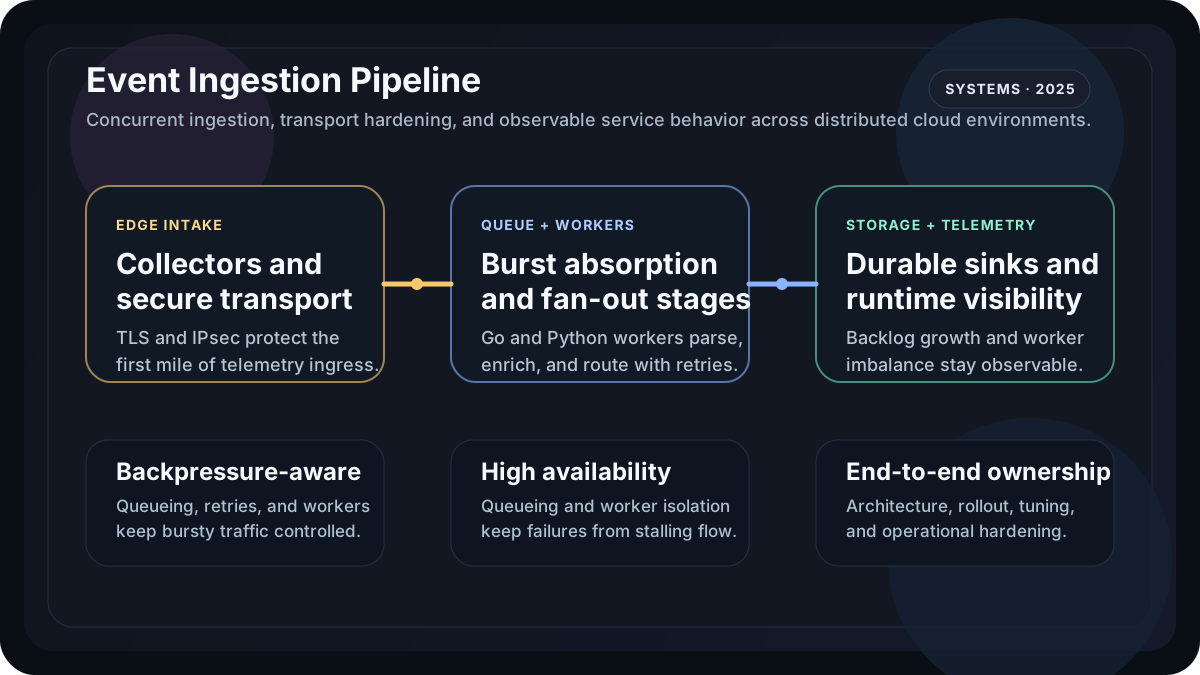
Technical diagram of a distributed telemetry pipeline with edge collectors, queueing, concurrent workers, storage, and observability notes.
Snapshot
What matters most in this project
Challenge
The problem was to keep distributed ingestion predictable under bursty traffic without letting coordination overhead, transport cost, or failure recovery dominate throughput.
Result
The system reached production as a resilient ingestion path with observable queue health, worker balance, retry behavior, and failure-tolerant service boundaries.
Approach
- Designed the ingestion path around concurrent workers, explicit backpressure, resilient queueing, and low-friction transformation stages.
- Tuned compute allocation, transport behavior, and security layers such as TLS and IPsec to preserve throughput without losing reliability.
- Handled design, production rollout, and operational hardening end to end rather than handing off the difficult parts after implementation.
Architecture
- Edge collectors forward telemetry into a resilient ingestion layer backed by explicit queueing and retry behavior.
- Concurrent worker stages normalize, enrich, and route data without letting coordination overhead become the throughput bottleneck.
- Storage and observability layers stay close to the runtime path so backlog growth, transport errors, and worker imbalance are visible early.
Impact
Owned the project from architecture through production rollout, tuning compute, retry, and transport behavior for fault-tolerant, low-latency streaming.
- Processed distributed event workloads through queue-backed workers with clear backpressure and retry behavior.
- Applied low-level tuning around TLS, IPsec, and ingestion logic to keep the pipeline resilient under load.
Tradeoffs and Decisions
- Chose explicit queues and worker coordination to make backpressure controllable instead of hiding it behind implicit buffering.
- Spent time tuning transport and security layers because TLS and IPsec settings were part of the latency budget, not an afterthought.
- Optimized for operational clarity as much as raw throughput so on-call debugging stayed possible once the system was live.
Stack