Architecture Diagram
How the system fits together
This visual is meant to show the operating shape of the project at a glance: where input begins, where decisions happen, and what the useful output surface actually is.
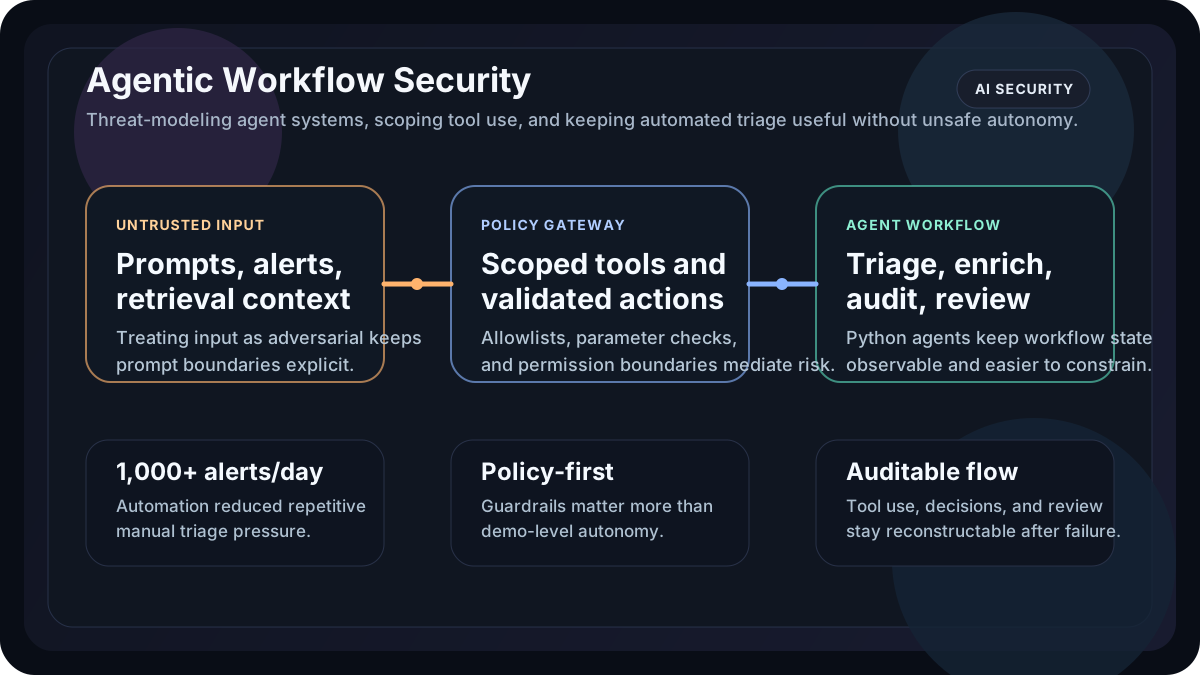
Technical threat-model diagram for an agentic security workflow showing untrusted input, policy gateway, agent runtime, tool mediation, and audit outcomes.
Snapshot
What matters most in this project
Challenge
The hard part was not just making automation work. It was making agentic workflows useful without leaving prompt, tool-use, and permission boundaries dangerously loose.
Result
The result was a security automation flow that improved triage throughput while making agent permissions, tool-use boundaries, and auditability easier to reason about.
Approach
- Reviewed LLM-enabled agents as systems, not just models, with attention to prompt injection, unsafe retrieval, and untrusted tool invocation.
- Designed Python-based multi-agent workflows to automate repetitive triage and enrichment tasks in a way that reduced manual fatigue.
- Mapped failure paths early so the workflow could stay observable and easier to constrain.
Architecture
- Separated model reasoning, policy decisions, and tool execution so the workflow could be constrained instead of trusting the agent as a monolith.
- Used Python agents and enrichment steps to automate repetitive triage while preserving explicit control over inputs, permissions, and outputs.
- Kept logging and workflow state visible so decisions could be reconstructed during review or after failure.
Impact
Surfaced prompt-injection and unsafe tool-use paths while improving throughput across a 1,000-plus-alert-per-day triage workload.
- Modeled failure paths for agentic systems that interact with tools and external context.
- Reduced human triage load by automating repetitive detection and enrichment steps.
Tradeoffs and Decisions
- Accepted some automation overhead in exchange for safer tool mediation and clearer audit trails.
- Focused on constrained usefulness rather than maximum autonomy because the failure modes mattered more than the demo value.
- Designed for human override and review instead of treating automation as a full replacement for analyst judgment.
Stack