Architecture Diagram
How the system fits together
This visual is meant to show the operating shape of the project at a glance: where input begins, where decisions happen, and what the useful output surface actually is.
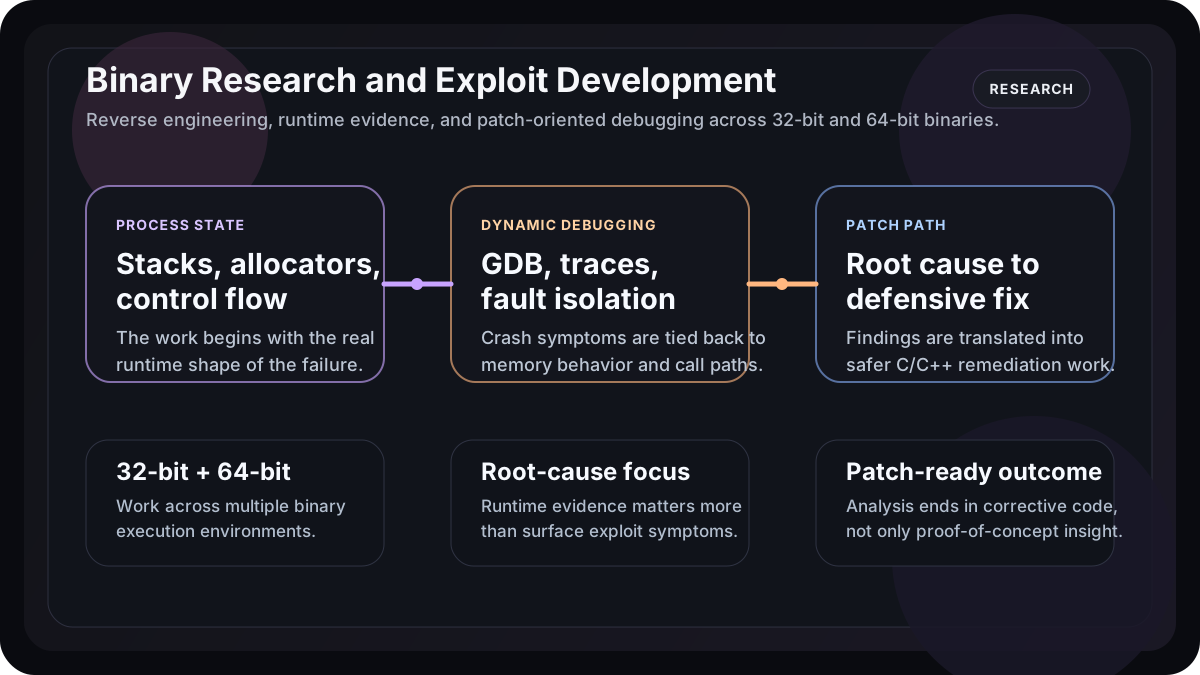
Binary-analysis workbench illustration showing GDB output, memory-corruption notes, and remediation flow.
Snapshot
What matters most in this project
Challenge
This work centered on understanding how unsafe memory behavior actually unfolds inside binaries and how to move from a crash symptom to a defensible root cause.
Result
The main outcome was deeper low-level fluency: exploit intuition, stronger debugging discipline, and remediation work grounded in the real behavior of binaries and operating systems.
Approach
- Reverse engineered binaries across 32-bit and 64-bit environments to reason about process state, allocators, and vulnerable execution paths.
- Used GDB and dynamic analysis to isolate corruption sources instead of stopping at surface-level exploit symptoms.
- Translated debugging findings into concrete C/C++ fixes that addressed the underlying crash condition.
Architecture
- Started from process state, stack layout, and allocator behavior to understand how the vulnerable path actually unfolded at runtime.
- Used disassembly and dynamic debugging to connect crash symptoms back to memory operations, calling conventions, and control-flow changes.
- Treated remediation as part of the work so the analysis ended in safer code instead of only an exploit demonstration.
Impact
Used GDB and dynamic analysis to trace corruption faults to root cause and authored optimized C/C++ remediations for crash conditions.
- Worked directly with allocator behavior, process memory state, and OS-level primitives.
- Demonstrated deep debugging fluency across binaries, kernels, and crash remediation work.
Tradeoffs and Decisions
- Spent more time in runtime evidence and lower-level inspection because surface-level symptoms were misleading.
- Used exploit intuition as a way to reason about risk, but kept the end goal defensive and remediation-oriented.
- Accepted slower iteration in exchange for precision when memory-corruption behavior could not be reasoned about safely from the source layer alone.
Stack